About Ochsner
Ochsner Health is a system that delivers health to the people of Louisiana, Mississippi and the Gulf South with a mission to Serve, Heal, Lead, Educate and Innovate.
Over the two-year Infectious Diseases training program, fellows rotate between inpatient service and outpatient electives every two-weeks.
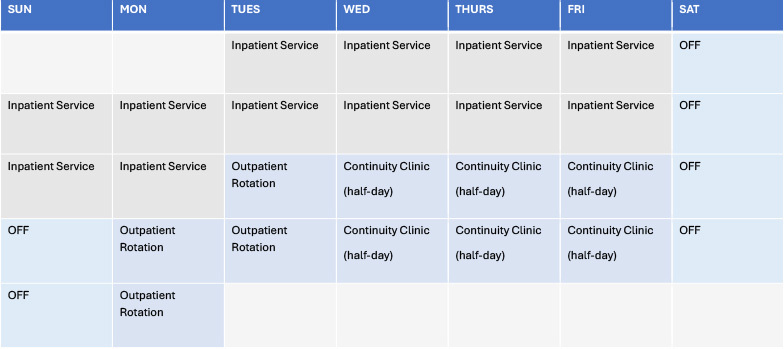
Inpatient services are conducted at Ochsner Medical Center - New Orleans with University of Queensland Medical Students, Internal Medicine Residents, and Infectious Diseases pharmacists.
Fellows rotate through three inpatient teaching services:
General Infectious Diseases Pankey Service
The Pankey Service offers fellows a diverse experience that involves consultations from multiple disciplines. Virtually all aspects of infectious diseases are encountered on this service including HIV/advanced-HIV, travel-related infections, and post-surgical infections.
Critical Care Infectious Diseases Service
Fellows work closely with the Critical Care teams on the four Intensive Care Units: Cardiac ICU, Medical ICU, Neurosciences ICU, and Surgical ICU. Fellows learn the challenges of antimicrobial stewardship in the ICU setting.
Immunocompromised Host Service
Fellows learn how to prevent and treat infections in immunocompromised hosts including solid organ transplant recipients, hematopoietic stem cell recipients, and patients receiving chemotherapy or biologic therapy.

During the two-week outpatient block, fellows have three half-days of Continuity Clinic where they gain experience in the longitudinal management of a host of infectious diseases including HIV and infections requiring outpatient antibiotic therapy.
The outpatient clinic will include Travel and Tropical Medicine visits. Fellows will learn how to provide pre-travel and vaccine counseling as well as evaluate patients presenting with symptoms post-travel
The remainder of the outpatient block is spent on outpatient rotations tailored to the fellow’s long-term career goals. Over the two-year period, fellows complete five required outpatient rotations to develop a strong foundation in the Core Concepts of Infectious Diseases.

Clinical Microbiology Rotation
This four-week rotation serves as an introduction to routine as well as advanced molecular and immunologic methods currently employed in the diagnosis of bacterial, fungal, mycobacterial, viral and parasitic infections.
Antimicrobial Stewardship Rotation
Our fellows work with the System Antimicrobial Stewardship Team to identify, resolve, and prevent drug-related problems in patients receiving antimicrobials. Fellows conduct surveillance activities to promote the rational, safe, and cost-effective use of antimicrobials. Fellows gain valuable experience in developing educational strategies, updating formulary and health-system policies, analyzing health information systems, and designing initiatives and programs to improve antimicrobial usage.
Infection Control and Prevention
Our fellows work with the Medical Director and Infection Preventionists to understand the development and implementation of system-wide policies for preventing and tracking hospital-acquired infections.
Hepatitis C Clinic
Fellows rotating through Hepatology clinic gain expertise in the evaluation, management and treatment of patients with hepatitis C.
Wound Care Clinic
Fellows rotating through Wound Care Clinic learn about advanced technologies and treatments for chronic ulcerations, slow-healing wounds, and various surgical problems.
Additional outpatient rotations to choose from based on fellow interest include:

Ochsner Faculty, guest faculty, and fellows participate in the Infectious Diseases conference.
Weekly
Monthly
Quarterly
Second Year
Areas of active basic science, translational, and clinical Infectious Diseases research include:

Ochsner Health is the leading nonprofit healthcare system in the Gulf South, serving patients across Louisiana, Mississippi, and surrounding regions.